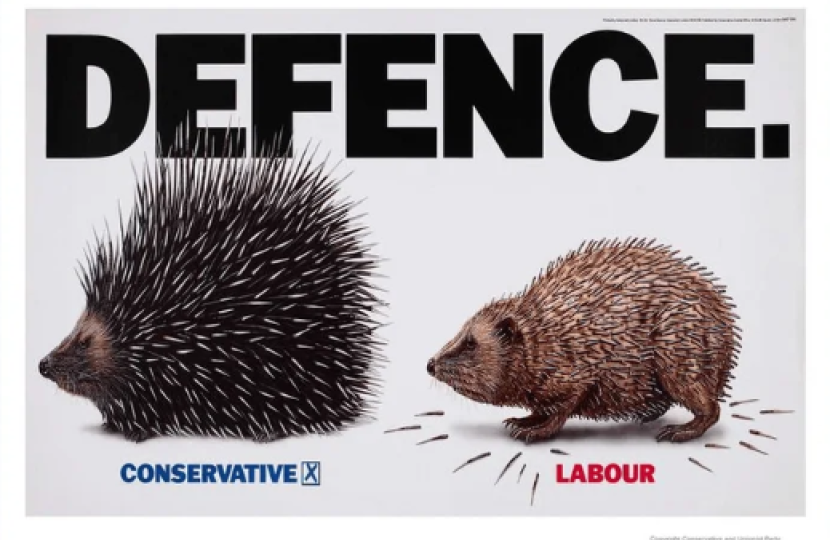
More than three decades after an iconic Conservative election poster warned about Labour's approach to national defence, the same political argument has returned to Westminster.
In 1992, the Conservative Party produced one of its most memorable election posters. Two hedgehogs appeared beneath the single word “DEFENCE” — the Conservative hedgehog protected by formidable spines, while Labour's appeared noticeably weaker.
The message was unmistakable: Britain needs strong defences in an uncertain world.
Fast-forward 34 years to October 2026, and national defence is once again at the centre of political debate.
Earlier this year, John Healey resigned as Labour's Defence Secretary, warning that insufficient military funding could put British personnel and national security at risk. Remarkably, Healey is now Chancellor of the Exchequer, responsible for finding the very money he previously argued was essential.
His Budget on 28 October provided funding for a £15 billion Defence Investment Plan, including a previously unfunded £4.7 billion. However, while Labour has set a target of spending 3% of GDP on defence by 2030, the detailed funding pathway has been deferred until next year's Spending Review.
Conservative leader Kemi Badenoch challenged Healey over the contradiction, telling Parliament:
“The Chancellor should have set out a plan for 3% today.”
She accused him of failing his own test, describing the Budget as “a plan to have a plan.”
The Conservatives have outlined an alternative commitment to reach 3% of GDP by 2030, alongside their proposed £10 billion Britannia Shield — an integrated missile and drone defence system designed to protect British cities, infrastructure, military installations and overseas territories. The party proposes funding its increased defence commitment through welfare reform and reprioritising government spending.
Labour maintains that it is delivering a substantial increase in defence investment and is committed to NATO's longer-term targets. Conservatives argue that commitments without a detailed funding plan leave crucial questions unanswered.
In 1992, the threat was different, but the principle behind that famous poster remains relevant today.
A nation's defences cannot depend on promises alone. They require preparation, investment and the political will to deliver.
Thirty-four years later, those two hedgehogs still offer a remarkably familiar illustration of Britain's defence debate.
“34 years on, the question remains: when it comes to defending Britain, who would you trust to keep our country safe?”